Saturday, March 14, 2020

There are a lot of birds in the Amazon!


Tuesday, March 10, 2020.  Let’s be honest!  There is absolutely no chance I’ll remember the names of all the birds we have seen so far - on our very first outing - let alone all the other ones to come.  There are a lot of birds here!  Our guide specializes in birds and can name them by call as well as by sight (which is impressive considering how many there are and the fact that they all call at the same time.).   (Side note:  even though he is a bird expert, he told us he really does not like to lead expeditions of bird watchers, because they are much too serious and never smile.  They just come with their check list, and that’s all that matters - there are not here to have fun!).
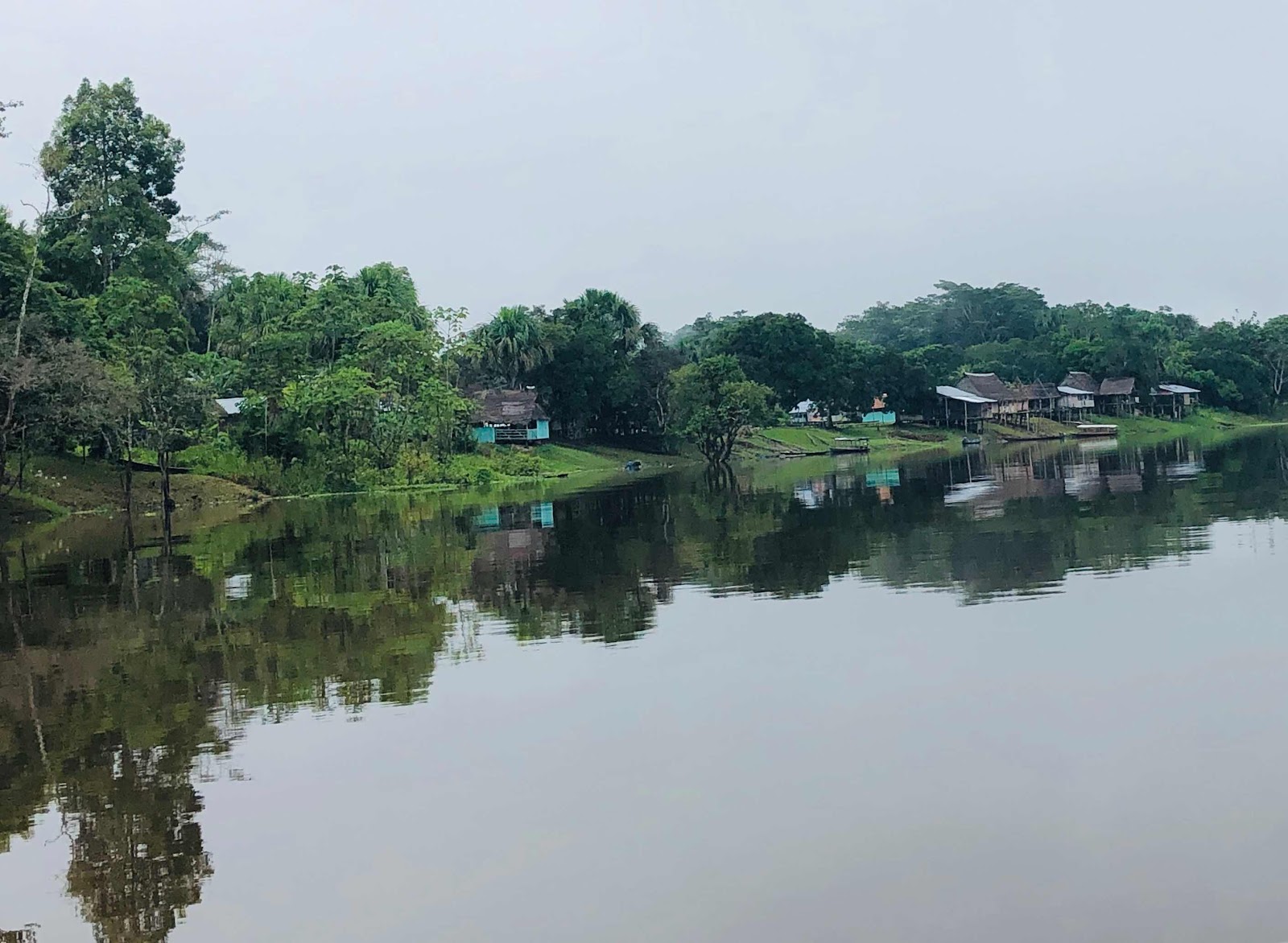
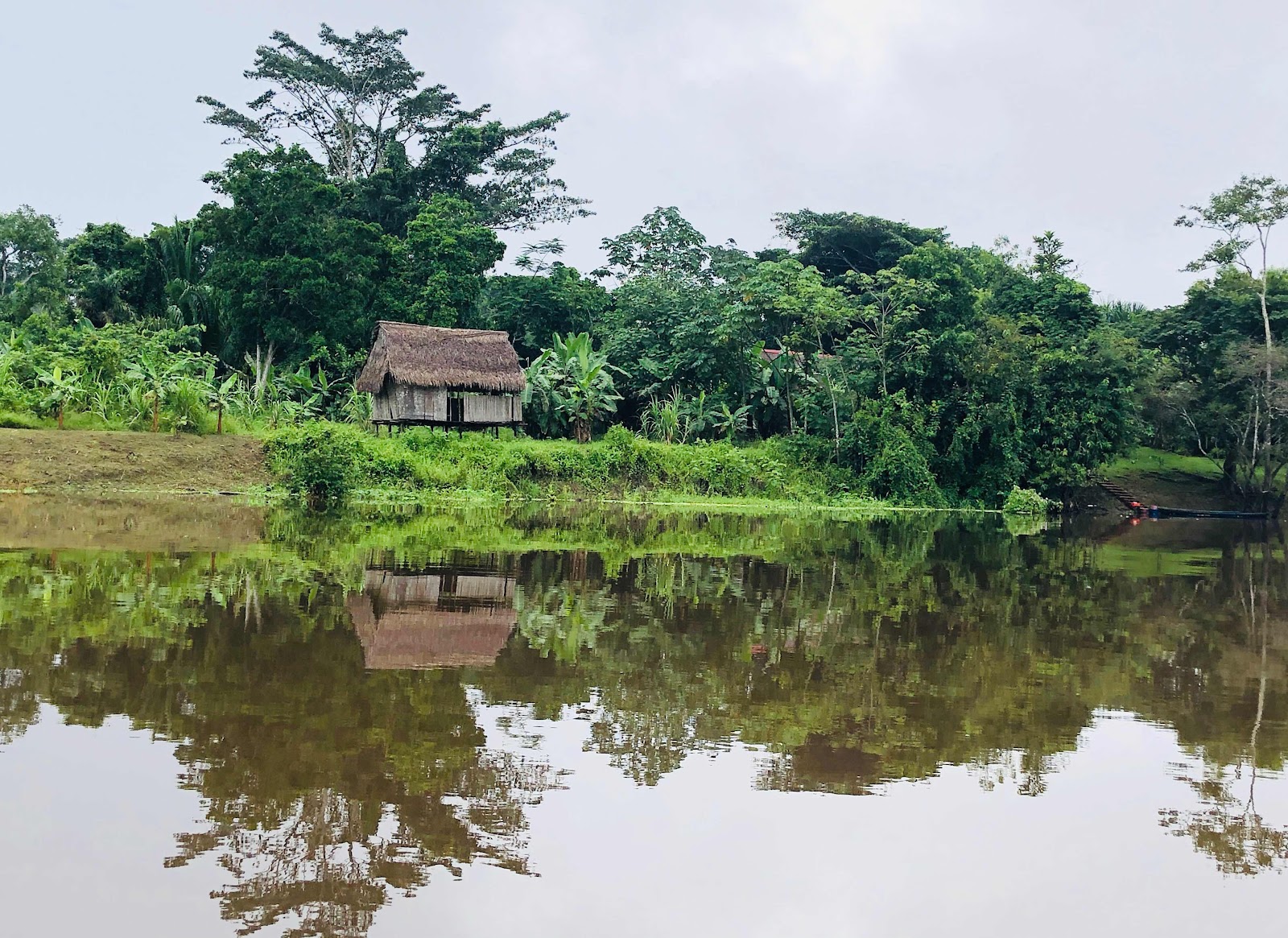
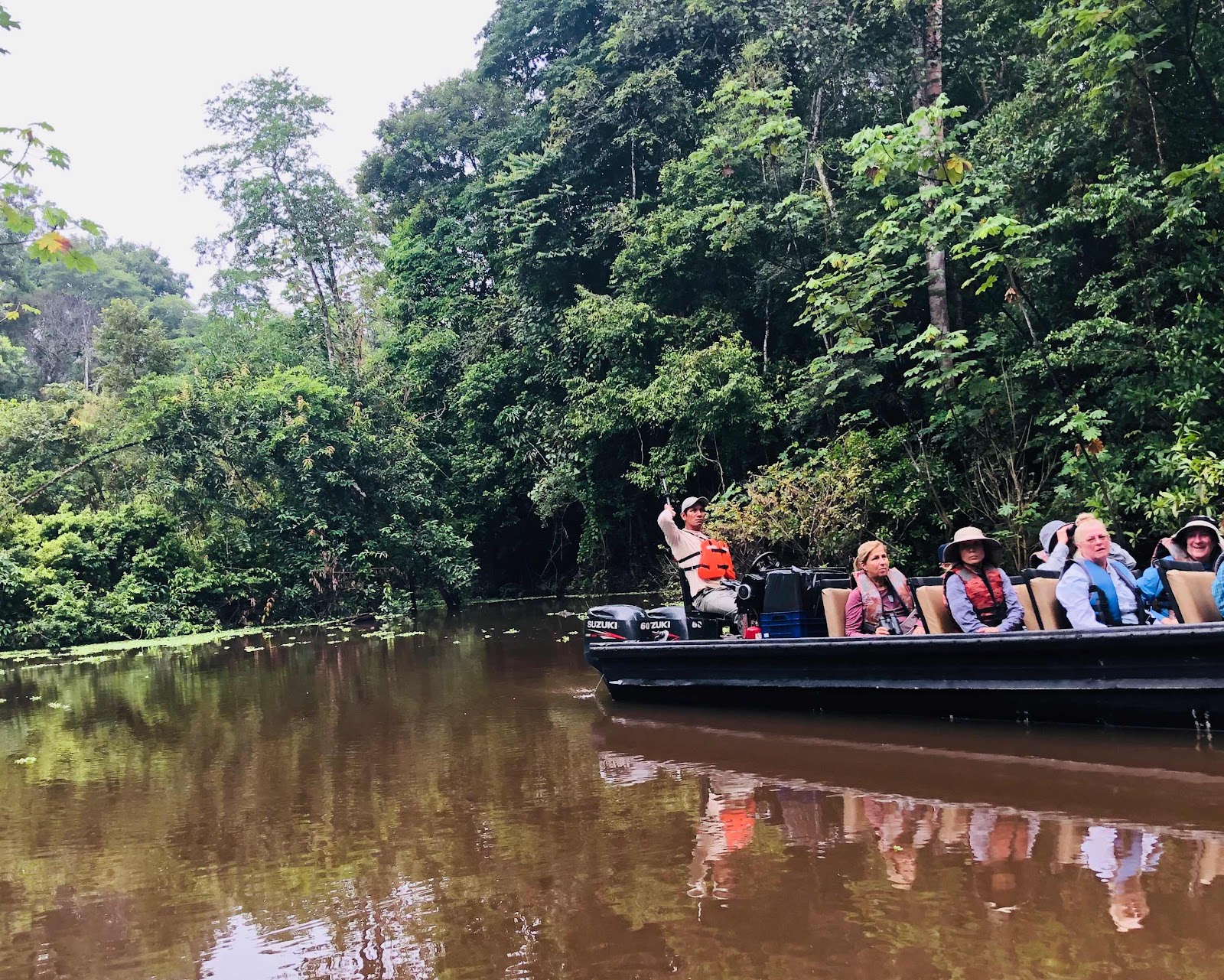
The day started early (6 am boat launch) because that’s when the birds are most active.  Today, we are in the “Réserva National Pacaya Samiria,” named for the “black river” that goes through it:  Most of the large rivers in the Amazon basin have brown water, because they carry the sediment from the Andes.  But the local creeks have a different bottom and clearer water, that changes the color to a significantly darker hue, almost black. 


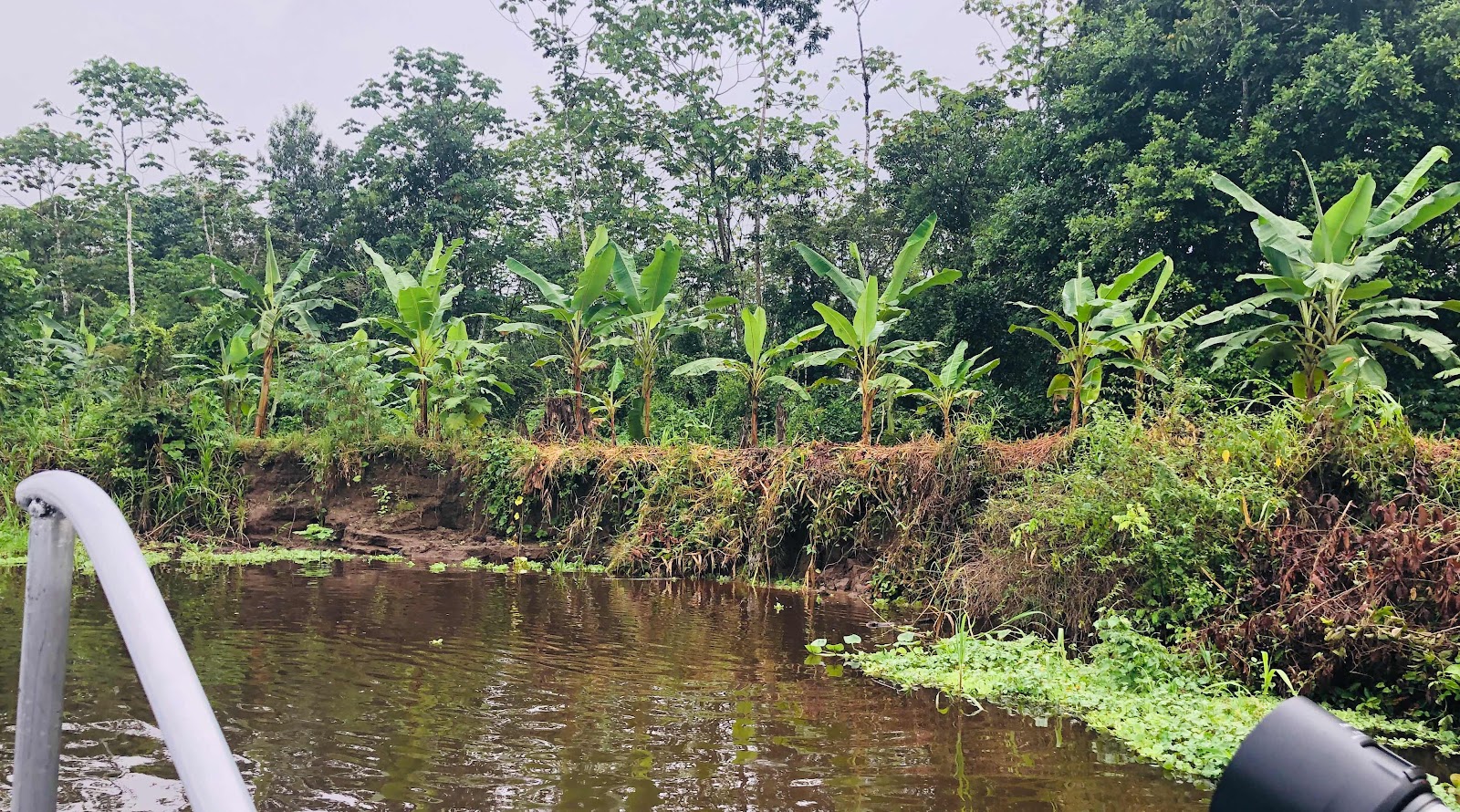
This being a reserve and not a national park, little river villages can be found along the banks.  This is a spot where the villagers have planted bananas.


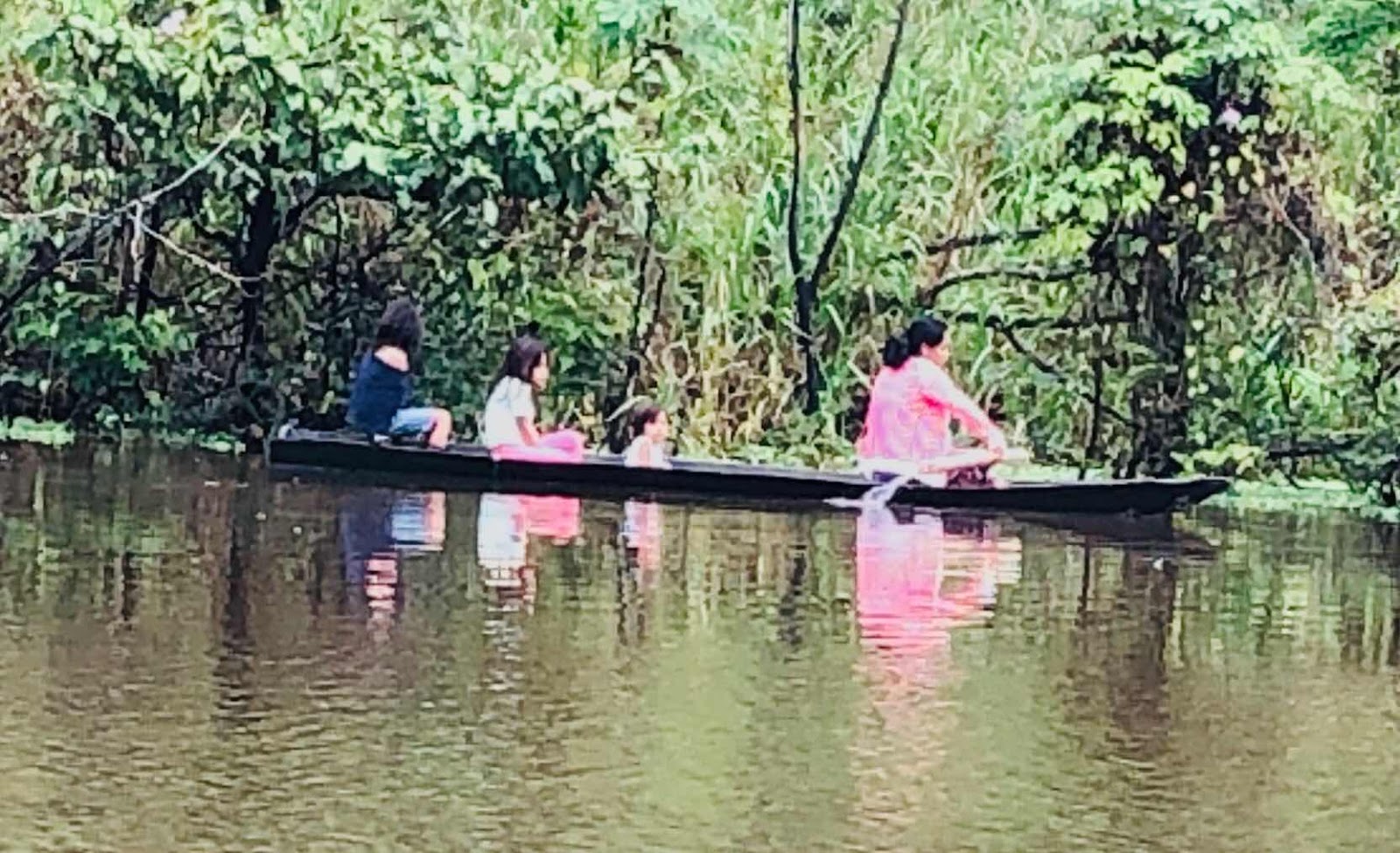
The inhabitants grow bananas along the shore and, during the dry season, when the river is much narrower, they use the 3 months of relatively dry weather to grow rice, corn, and all kinds of other vegetables on the banks of the river.  We saw a few of the local villagers today, fishing with hand made fishing poles, in hand made canoes.  Fish makes up about 80% of their diet.  
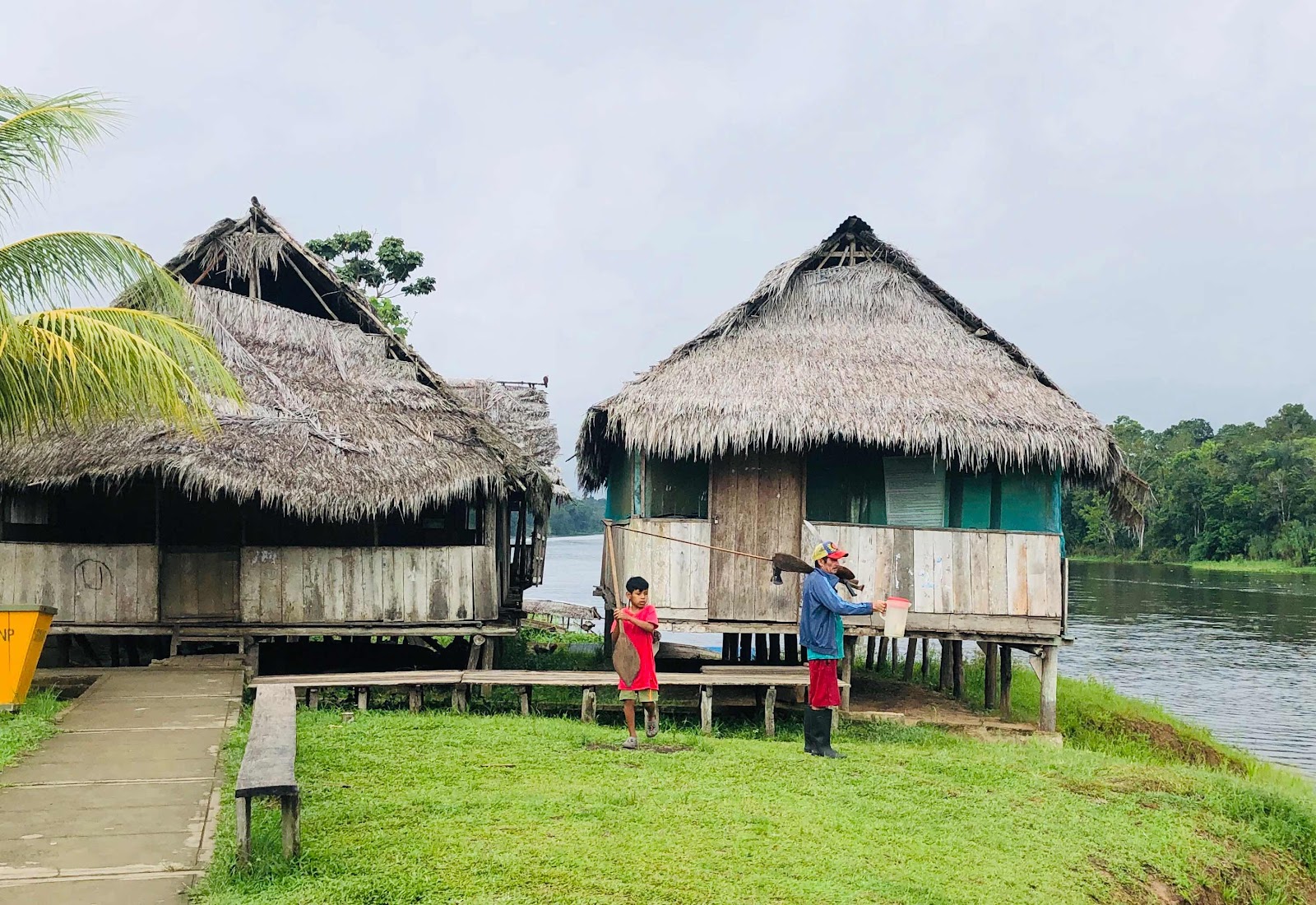
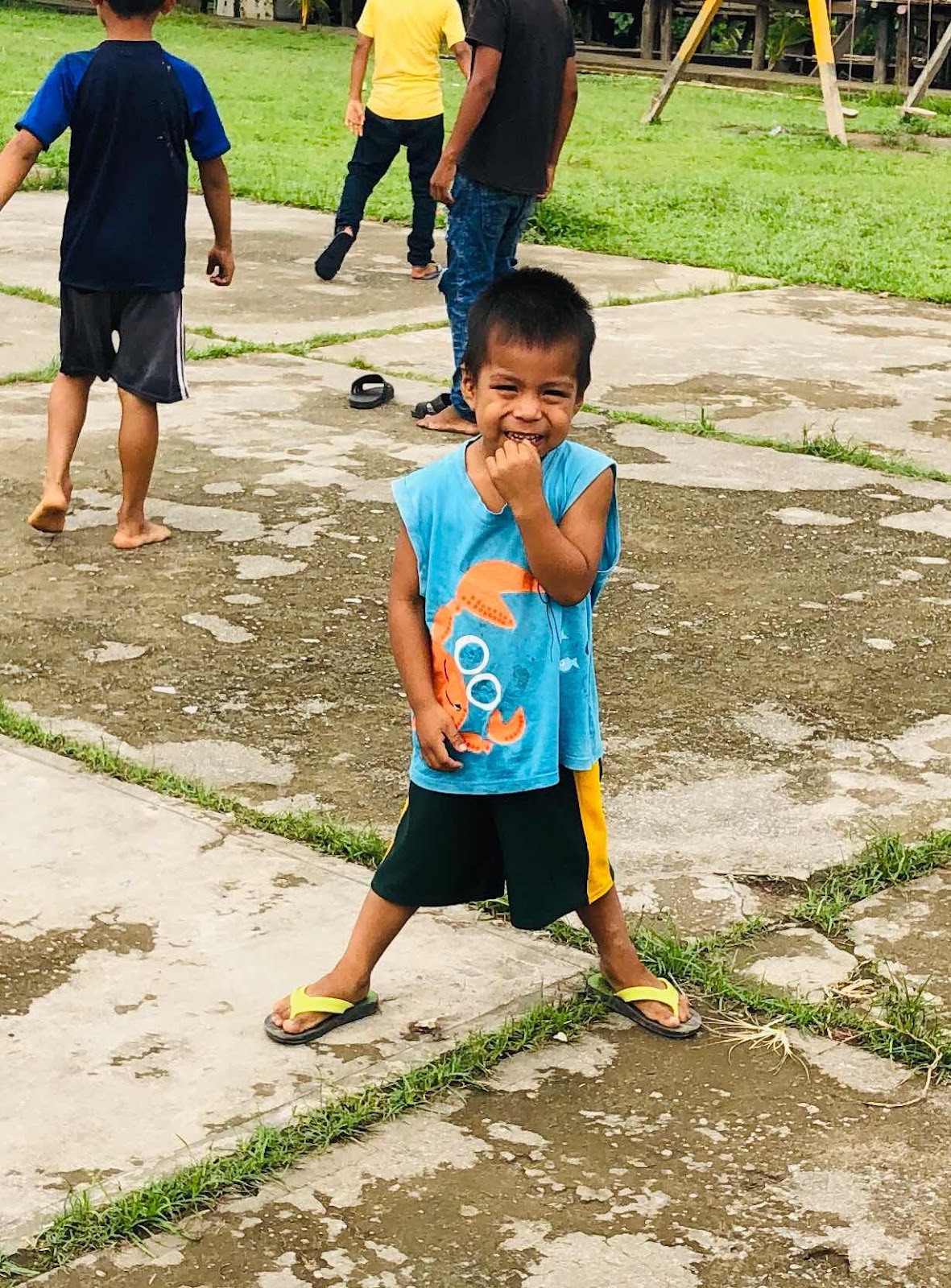
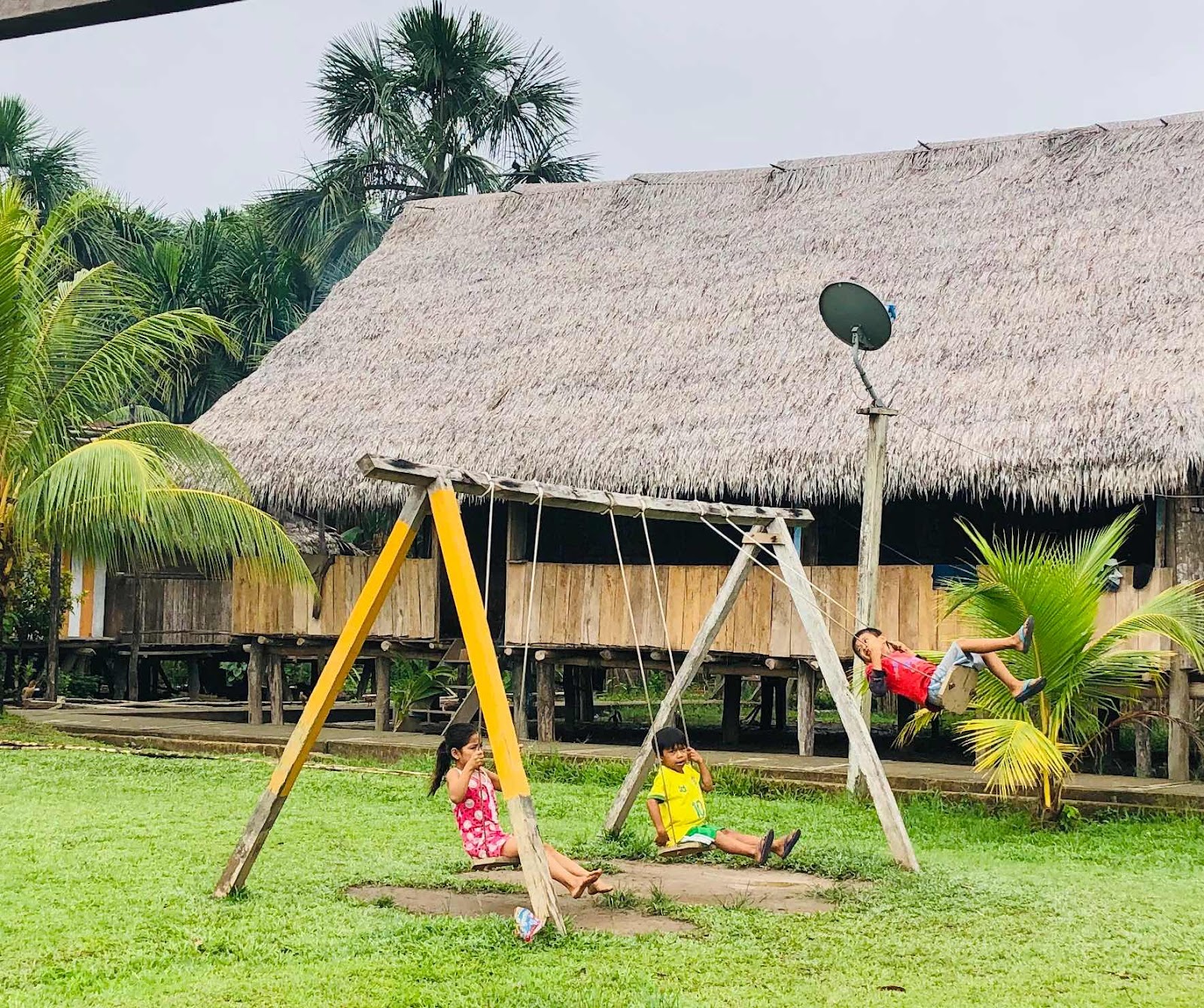
The little villages look very basic, but not necessarily poor, in the sense that the many children all look happy, healthy and well fed.  They don’t beg, but they do sell locally made goods - including soap made from a particular palm tree (I bought some).  There is no electricity, but the one satellite dish and generator ensures that they can watch the all important soccer games. (The generator only goes on for special occasions).  This particular village is home to 130 people, it has a school that goes from kindergarten to the end of elementary school (after which, children go to Nauta).  The teachers come for 9 months at a time from either Nauta or Iquitos.  While it does look like a pleasant and quiet life, it must at times get boring.

The main reason for our expedition though was to look for wildlife.  We saw several type of herons, kingfishers, rappers, egrets, swallows, wrens.. (see pictures of birds at end of blog).  Parakeets and parrots were flying above us all the time, although it was hard to see their colors well because at that time of day the light is very flat - but we will have other opportunities.
We also saw 2 types of monkeys (tamarins and another larger one whose name I forget- see picture at top of blog),
and a very sleepy sloth...... 
These bats were hanging out waiting for night to come back (they look so much like part of the tree that they are hard to see).  
This tree lizard was nice enough to pose for us. 

I caught a very quick glance at a pink dolphin, but am hoping to see many more!


We had breakfast on our skiffs, on the side of the jungle, which gave us more time for exploration (in general, the plan is to come back to the boat for breakfast after the morning ride).


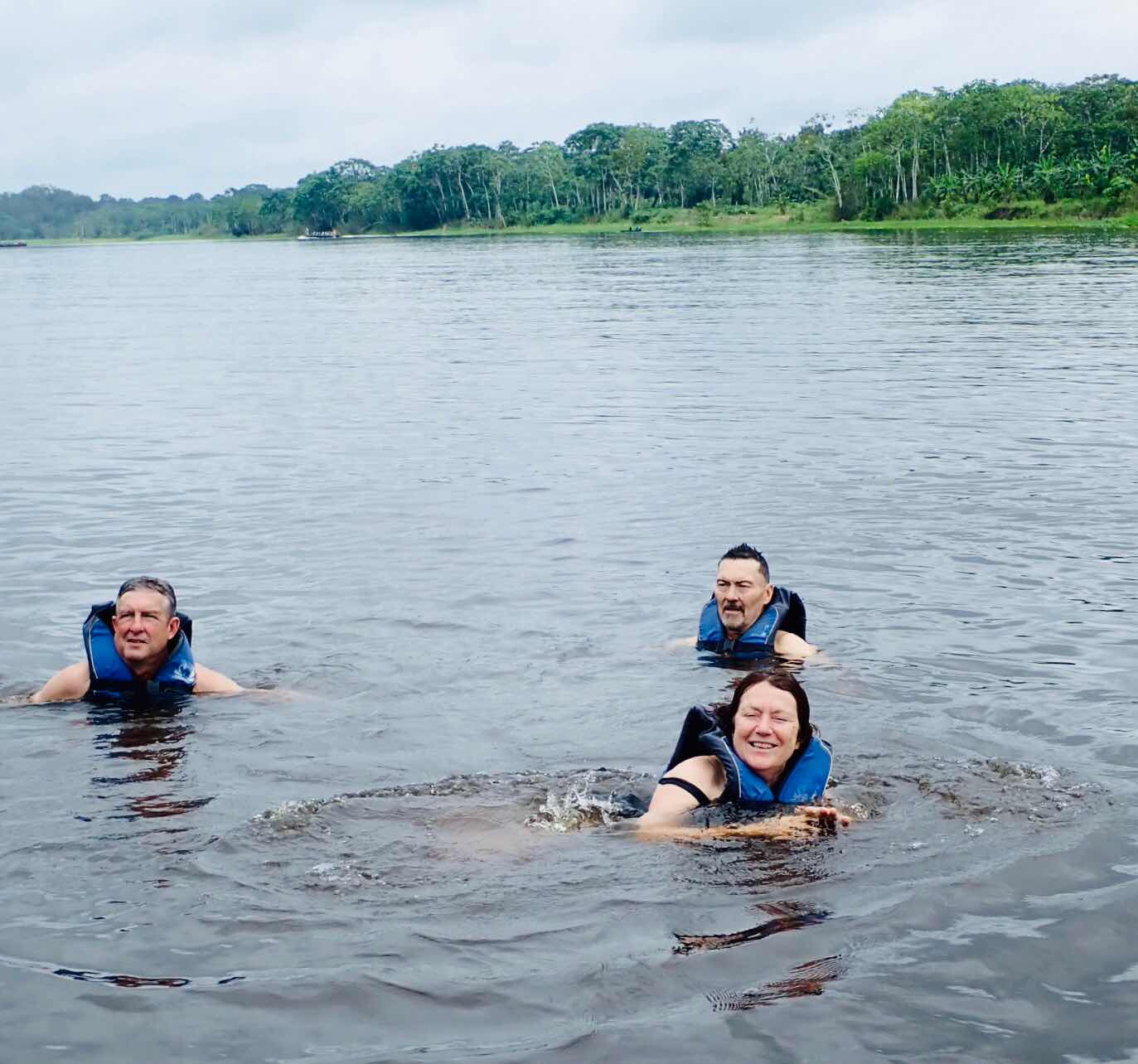
Our next activity was either another boat ride, or a swim in the Amazon.  I just could not resist the swim!  The water is not clear, because of the tannins that result from all the biomass decomposing.  But it is very clean.  And the temperature was perfect!  We floated around happily for about 40 minutes.  It was delightful!
Joe chose the boat ride, and saw a pod of dolphins! (It may not be obvious, but there are 3 dolphins in this picture - two adults and a calf).


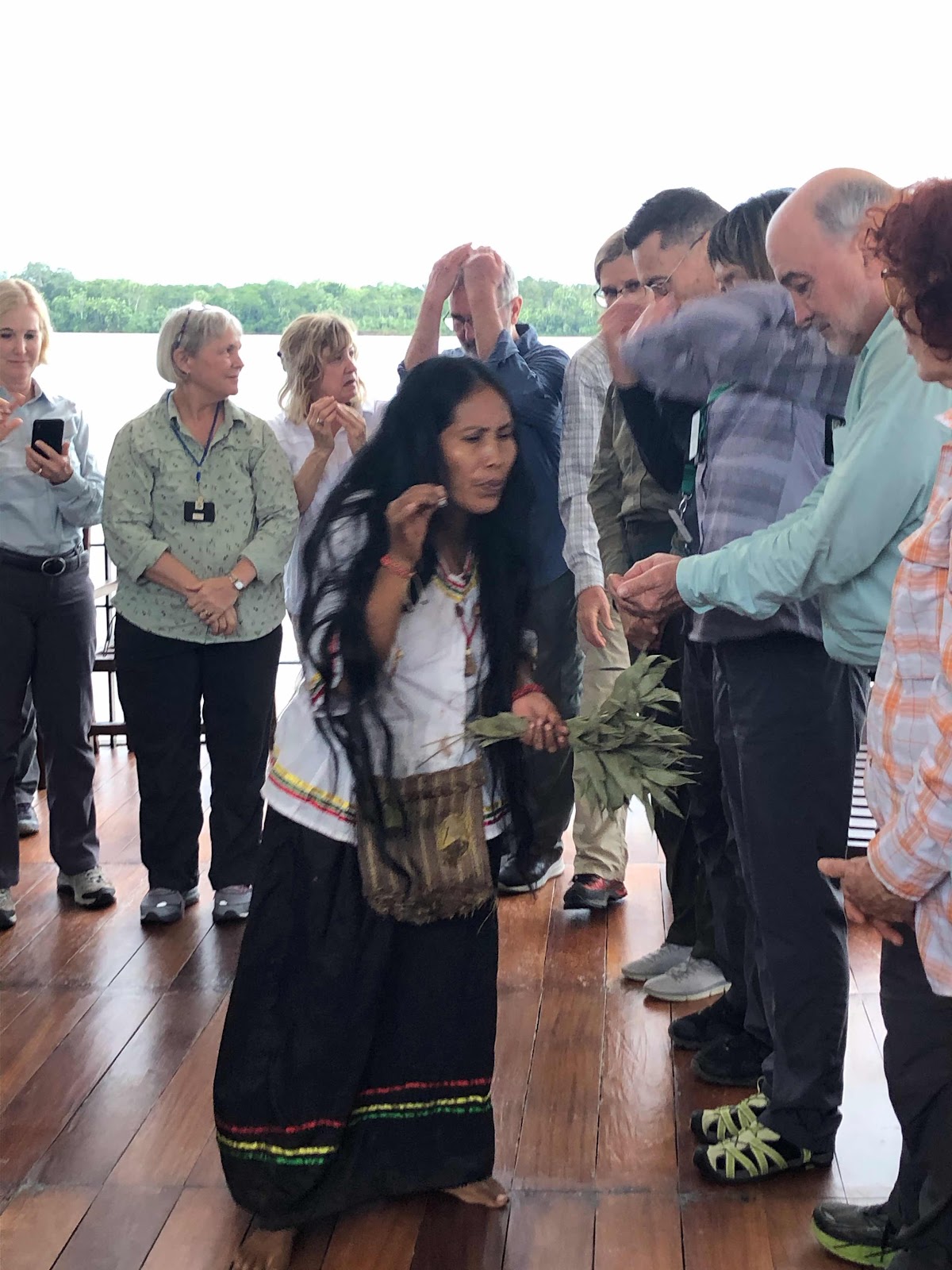
After lunch, and after too short of a nap, we had a lecture about plants that are used by Shamans all over South America for healing and spiritual enlightenment- and specifically about Ayahuasca, which is the most important here.  It’s main effect is to make you puke.... but after that, you get hallucinations that are supposed to bring knowledge and a higher level of understanding of the world.  The puking (which is supposed to be very bad and part of the process) is a VERY strong deterrent for me, so I think I’ll pass......  But we had a local Shamana come and discuss her role as a healer and it was very interesting.  She did a ritual cleansing for us, using tobacco. It was cool.
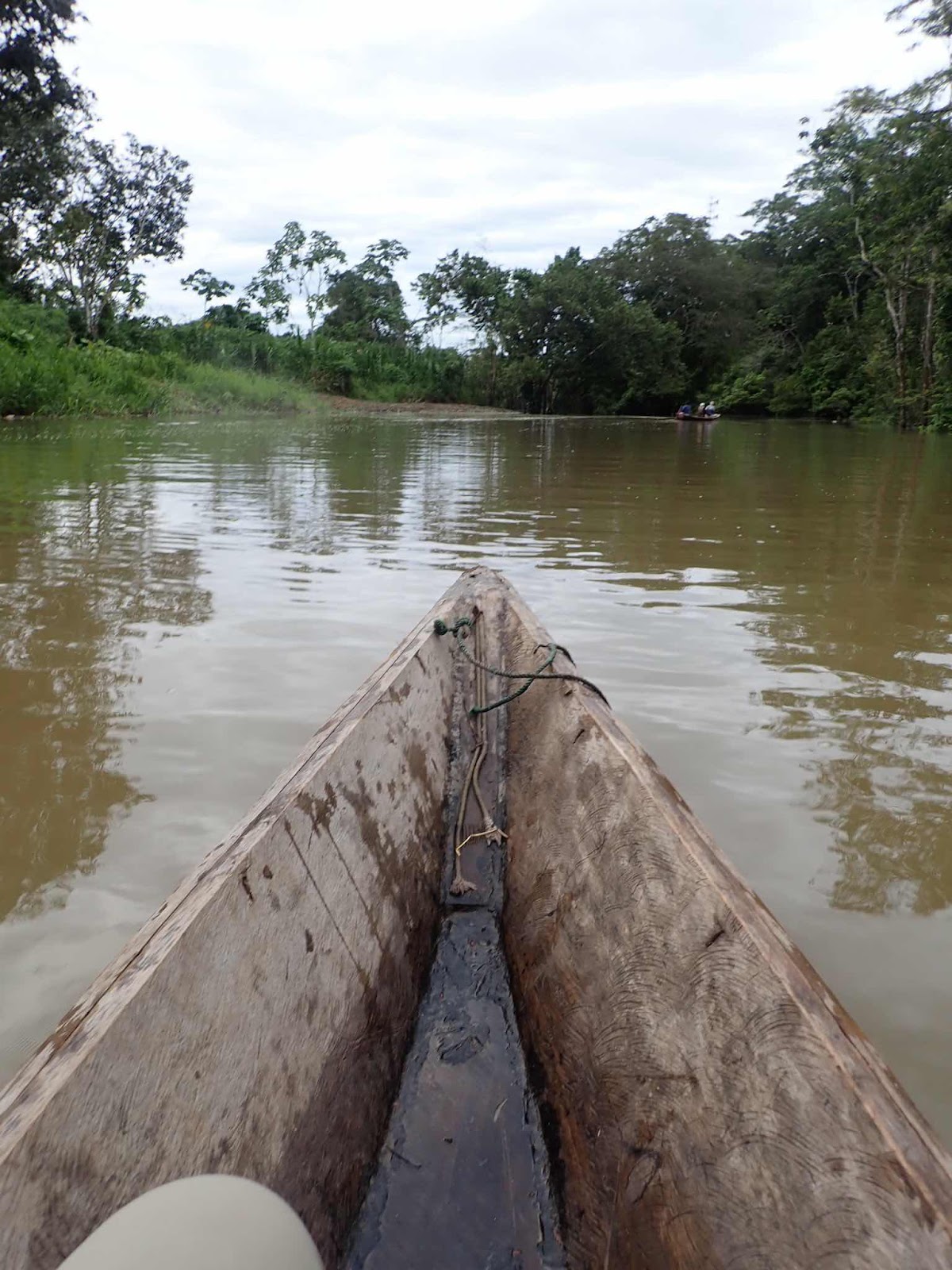


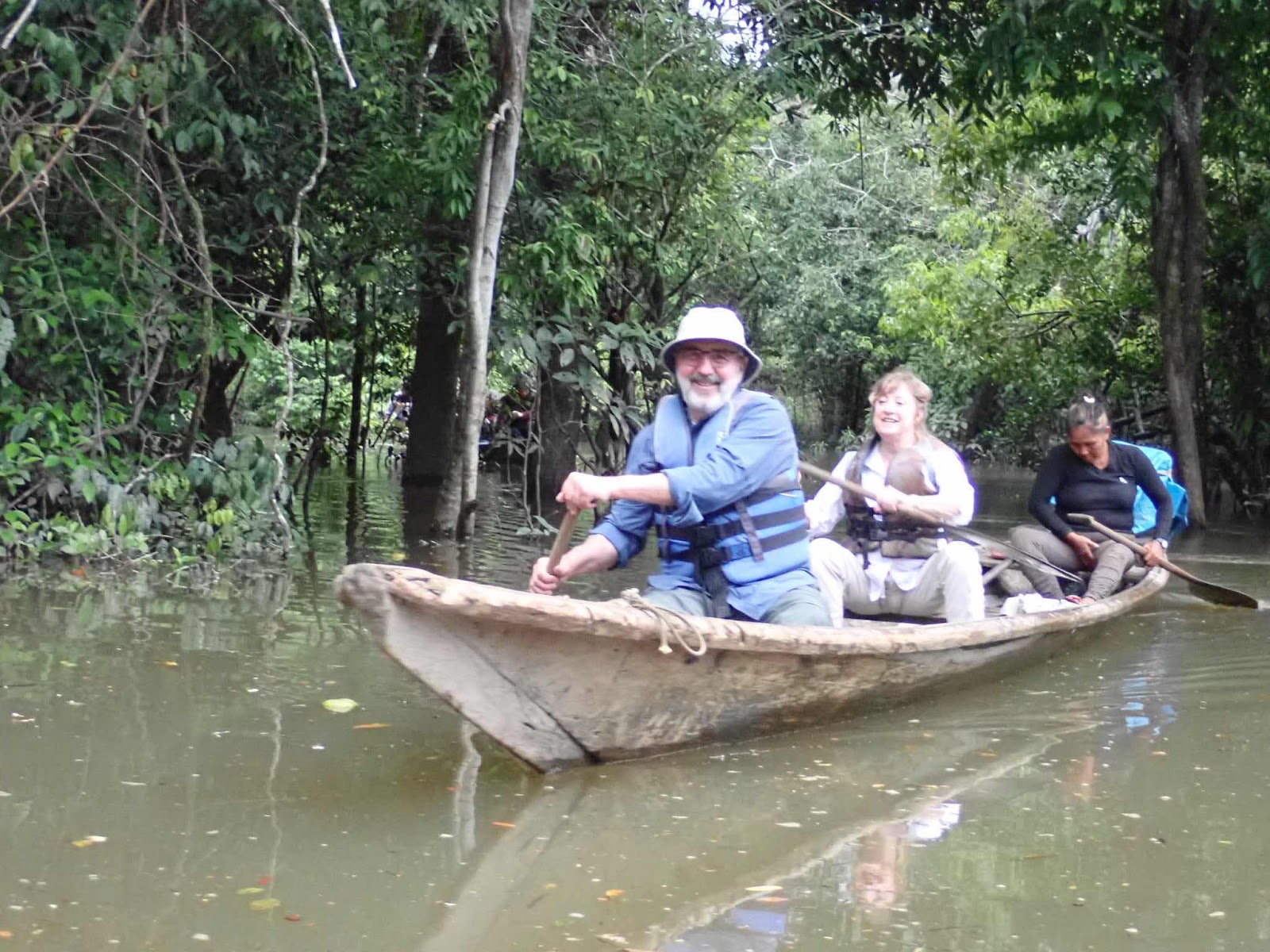
We then went on a canoe ride around the local village (which happens to have a cellular tower, and electricity).  The dugout canoes are heavy and a bit wobbly, but we made it back before the rain.
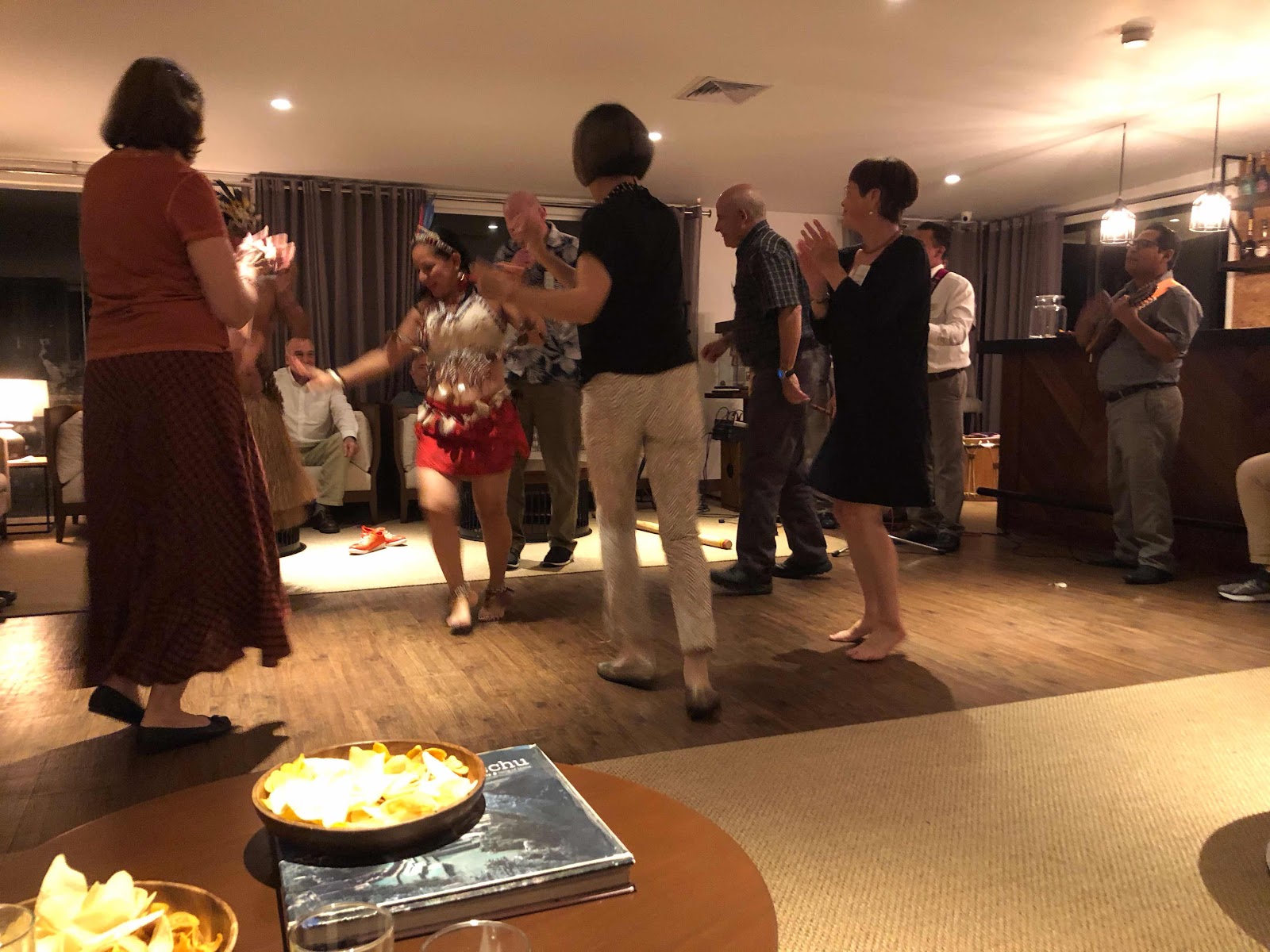


Before dinner, the crew put on a South American music show - they were truly AWESOME!  The talent - particularly from the guy playing the Andian flutes- was remarkable. 
Another dinner of local Peruvian food (a lot of fish and vegetables), and we are in bed early, since we are getting up at 5:15 am again tomorrow.

Following are pictures of birds, most of whose names I no longer remember:


We are off to the Amazon!


Monday, March 9, 2020.  We flew from Lima to Iquitos, providing one last look at the pretty coast by Miraflores.  It’s about a two hour flight, over the Andes, and then into the rainforest area.  We saw none of the Andes though, because they were in the clouds.  

But as we got close to Iquitos, I got a nice view of the Nanay river, one of the many tributaries of the Amazon, and of the forest itself, which, from here, looks endless.....


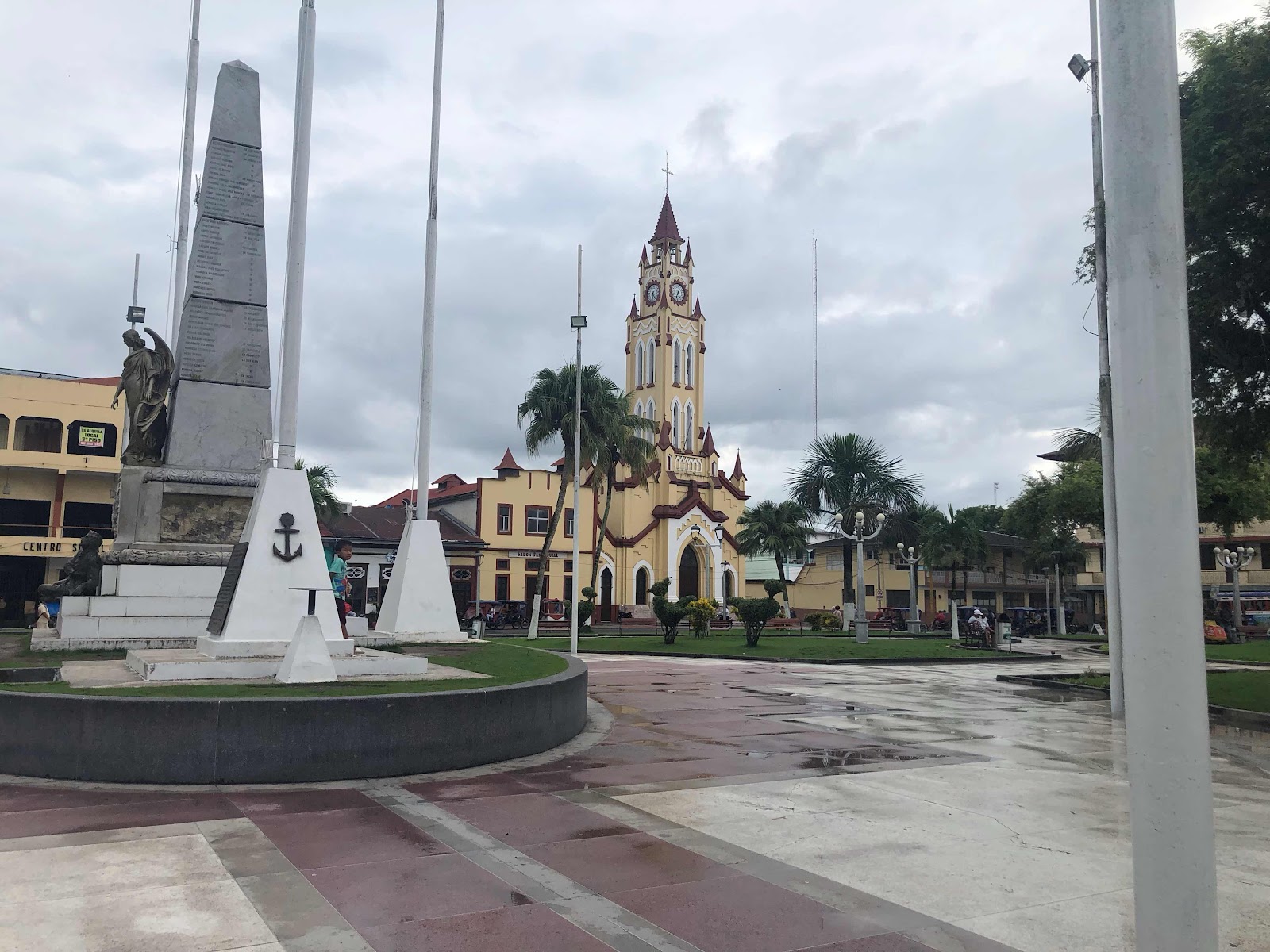
We drove into Iquitos, a town of 700,000 inhabitants, and 50,000 motorized rickshaws (I’m not making this number up).  The ratio of cars to rickshaws must be 1/100.  But the traffic works very efficiently.  Side note:  the rickshaws (tuktuks) we’re introduced when a local businessman went to Thailand and saw them and decided they would work well here.  They do!.  The town has schools, a university, a hospital, a Hilton hotel (where we had lunch), and electricity all day long, which is not true of most of the villages in the region.  It cannot be reached by road, but only by boat or plane.  All equipment, all supplies, and all food that cannot be grown or gathered locally is brought by plane, or by boat on the Amazon. In fact, most of the motorized rickshaws are Hondas, because Honda has a assembly plant there:  they ship containers of parts, which is easier than shipping the actual thing.  This being Peru, potatoes are a very important staple - but all potatoes need to be flown in:  potatoes do not grow here because the soil is too wet (neither do onions, garlic, carrots,,, etc).  However, the jungle is plentiful in many other ways - providing many kinds of bananas and other fruit - and 3000 types of fish!  Our guide grew up in a small village on the river (10 families, no electricity, travel exclusively by canoe...).  His story is indeed fascinating, and I’ll detail it later - anyway, he said “only lazy people go hungry in the rainforest, because there is so much food to be gathered.  We, however, had the luxury of being lazy.... since they just fed us at the Hilton (by a long shot the fanciest building in town, located on its main square, which, oddly, also includes this so-called “metal house”, which was designed and built by Gustave Eiffel (of Eiffel Tower fame).  It was, supposedly going to Quito, but wound up in iQUITOs instead!   No WiFi for the next five days means that this piece of information will remain mysterious and unexplained for at least 5 days....


After lunch, we drove on the only road out of Iquitos.  It goes about 100 km to the smaller town of Nauta (about 7000 inhabitants),  Then it stops.  It is the only road in this entire district.  It’s in relatively good shape, but crowded with a lot of the 3 wheel Honda things, which makes it hard for a bus to go much faster than 50 km/hour.  So the trip took 2 hours.  Along the way, we passed little villages- the houses mostly made of corrugated metal and bricks, where there were a lot of dogs just roaming around (they did look friendly though).  Certainly a very poor area but again, no one looked hungry.


Finally, we arrived in the little town of Nauta, where we embarked the Zafiro- our floating home for the next five days. (See picture at top of this blog). 

  I looks a bit like the ship in the movie “the African Queen”, but with AC and a Jacuzzi. 

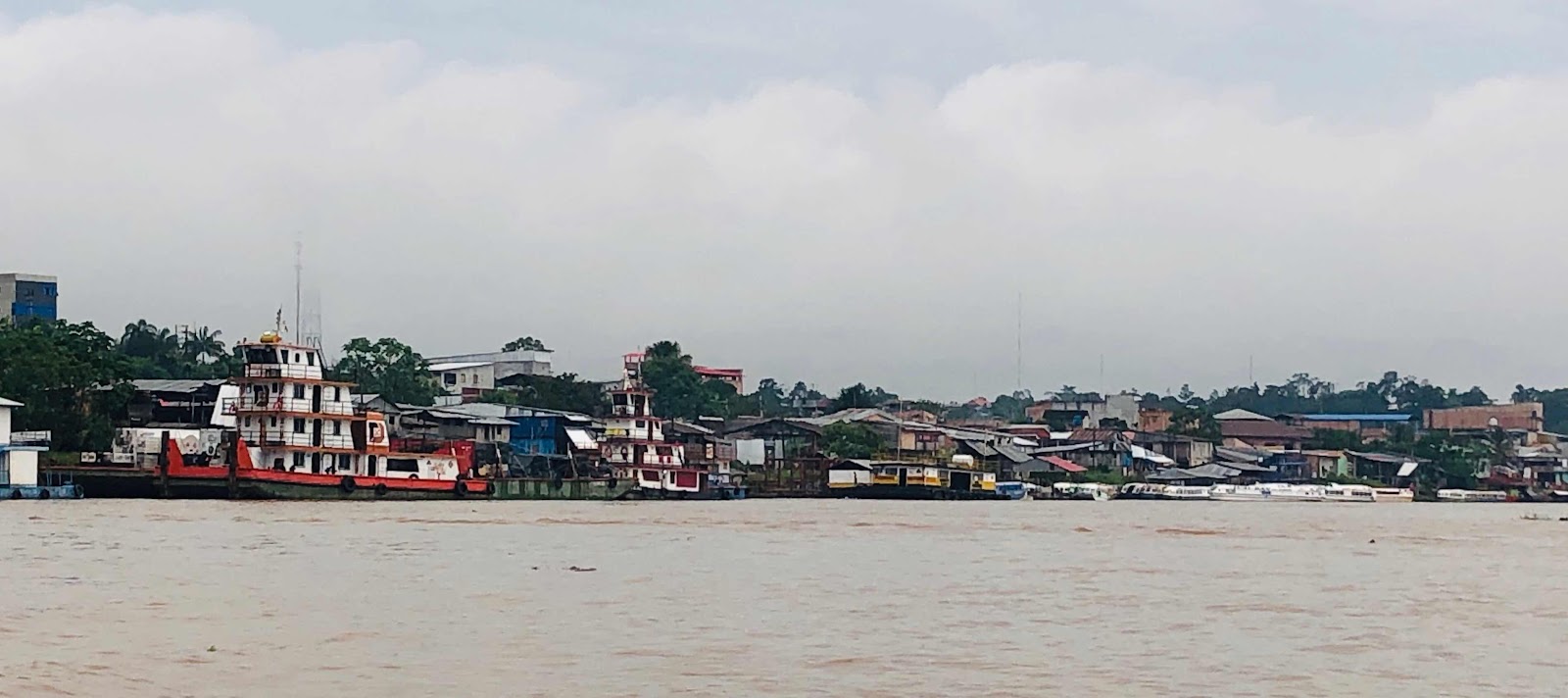
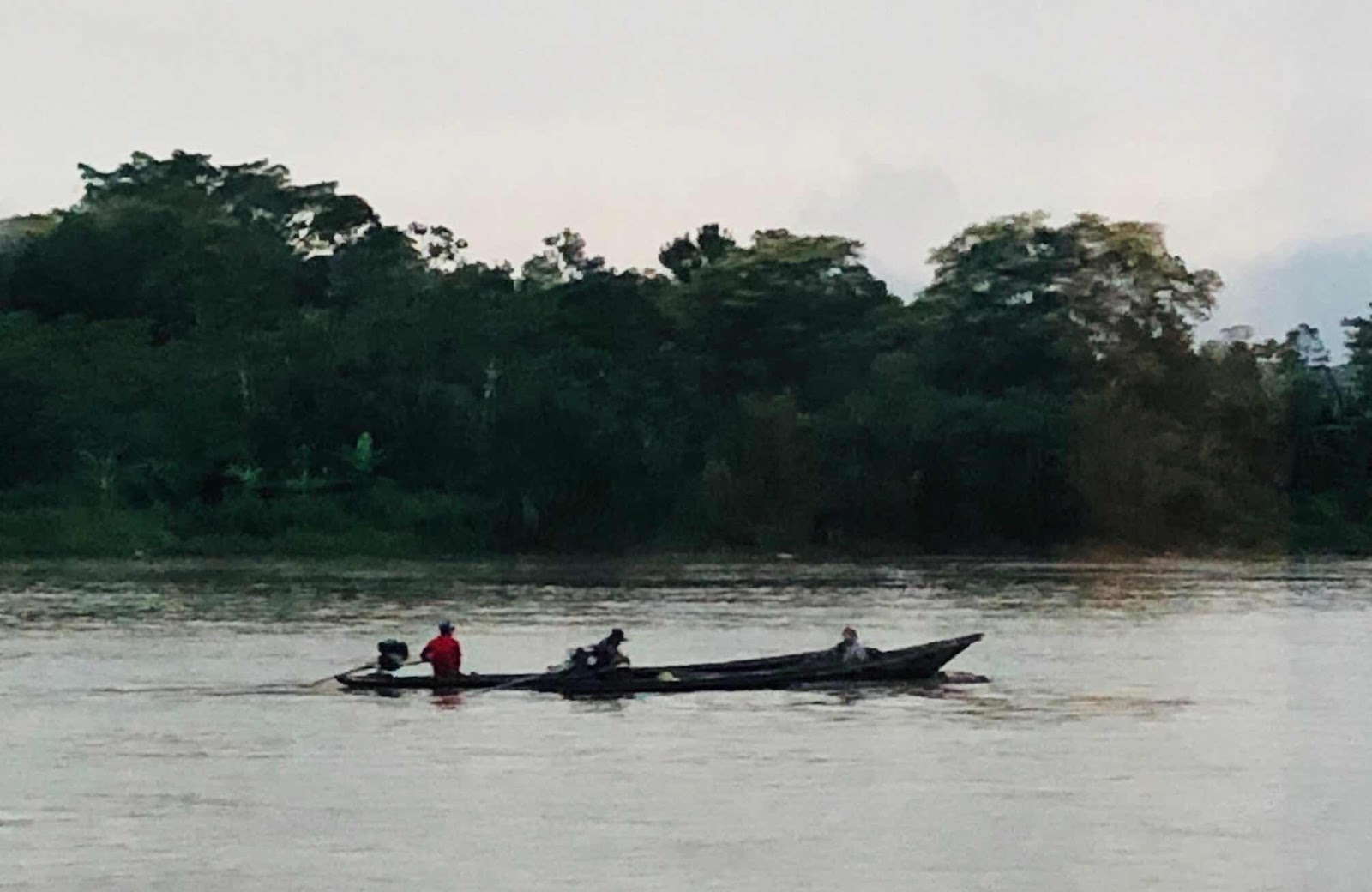
 As we were pulling away from Nauta, the local fishermen in their dug out canoes where coming back to town.

There are 32 of us tourists on this ship - it’s a nice small group, and everyone we have met is nice and interesting.
We were treated to our first sunset on the river.  Getting up at 5:30 am tomorrow for our first exploration - animals are most active at dawn!
So going to bed early.


Sunday, March 8, 2020

Hace mucho calor y estamos muy cansados en la ciudad de Lima, Peru


I have been learning Spanish (using Duo Lingo and Babbel) for almost 18 months, and I was very pleased to realized that, to my surprise, I do understand a lot of Spanish!  In fact, I can read it almost fluently, and if people speak slowly (which they don't!), I understand a lot too.  But I have had little opportunity to try speaking it yet, because so far, almost everyone I’ve interacted with spoke better English than I speak Spanish.
But - look at the title of this blog! Impressed??


It has been a hot and tiring day in Lima.  If fact, it started tired.....
Our flight left NYC at 10:25 pm, and arrived in Lima at 6 am.  Joe and I shared 3 seats, which is not awful, so I squeezed in a couple hours sleep (I don’t think Joe slept at all).  We were lucky, because we were one of the first flights of the day, and got out of the plane quickly, because the line was starting to get really long at immigration - because Peru got it’s first case of Corona virus 2 days ago - AND THEY ARE FREAKING OUT!!!!!!!
So they do what airports do with all kind of other threats:  put protocols in place that make life A LOT harder for travelers, without actually getting rid of the risk (like making my then 89 year old mother take her boots off last time she came to visit....  she is a dangerous woman, but not that way.....).
So anyway- what they did is:  the immigration officer would - very slowly- look though everyone’s passport to figure out if they had traveled someplace scary.  If yes, they would close their line, and personally accompany that person to another long line, where people in all kind of medical gear would take the person’s temperature.  While the agent was away - that line was dead....  about 1/2 the people were sent to the medical team. But the really amazing part is that everyone (including the people suspected of carrying the Corona virus) got to use the same touch screen to get all ten of their finger prints- without anyone wiping the screen once!!!!!!
Well, for once I was grateful for hand sanitizer.....
The line took 1 1/2 hours..... but at least, our bags were ready for us when we got out......  but we still needed a small and frantic detour to the LATAM baggage desk because.....  I F@#$!ING FORGOT A BAG IN THE PLANE!!!!!!!  Like - really!!!!!!! How often do I have to do that before they put me in a home????????? (At least this time, my passport was not in it.... but my malaria pills, which are sort of important for the rest of this trip were....).
The good people at LATAM had found it when cleaning the plane, and it was waiting for me at the desk.....  I almost kissed the young woman who gave it to me, but - you know.... Corona virus, etc...
Joe had booked an extra night at the airport hotel - which when he did I thought was wasteful, since we would not sleep there.  I was wrong.  Being able to cross the street, go into the room, take a nice shower, have a very nice (included) breakfast was worth every dime. 
At breakfast, the waiter gave me this delightful little plate and told me" It's for international women's day" (which he had to repeat twice because he had a very strong accent - but isn't that adorable?)


 We only have one day here, so we asked the hotel if they could arrange a tour, and - for a very reasonable amount of money- we had a private guide who took us around the city.  We started in the oldest part of the city.  Having now visited 3 South America capitals (Buenos Aires, Quito and now Lima), I have to reluctantly be impressed by the Spanish conquistadors...
  The amount of Spanish uniformity they brought to an entire continent - without planes or heavy equipment is- while depressing and wrong in a lot of ways- also awe inspiring. 

The main square, the churches, the convents, are almost interchangeable (not 100%- for instance there is a lot  more gold in Quito) - and in a good way. 
All the cities are pretty, well organized, with pretty side streets (which got a lot busier as the day went one) and have survived the chaotic history of South America nicely.
So - bottom line:  Lima is a pretty city, which  mostly reflects it's Spanish heritage and has lost most of the previous civilization's look- and that's a bit sad too.

But the balconies, typical of the colonial era, are really cool.


 And so are the other, many and varied types of architecture that came later on.


It's also very clean, feels safe in the neighborhoods we went to, and has what looks like a very good public transportation system.  Some of it is in disrepair- but - honestly - more than Queens near JFK??
Short history:  Incas took over from the previous civilization around 1350, Spaniards came about a century later.  Peru declared independence in 1822, took a couple of wars for that to take, but it did eventually around 1844.
Now, looking at people on the street, it is a nicely integrated (if struggling) society.  I think we can learn a lot from Peru.
The old city, on a Sunday is mostly enjoyed by the locals, with street vendors and performers, and the obligatory South American political demonstration.  It's very nice.

The most interesting place we visited was St. Francis Monastery and it's "catacombs". These are not technically catacombs, but an underground cemetery, where about 30,000 people have been buried over the centuries- I've never heard of anything like it - lots of bones!!!! (but no pictures allowed, which is too bad, because it was cool and the church itself was very beautiful - although so similar to the one in Quito, you could just go back and look at those pictures....).  I would particularly have liked to show a picture of the large "Last Super" mural, which was painted around 1610 and had been enhanced to attract the locals to the new religion.  So the last meal included potatoes, chili peppers, and even - as a centerpiece- a guinea pig!


After the old city, we drove through the posh neighborhood of Miraflores, with it's cool condos and hip restaurants: think Brooklyn, but with a REALLY pretty park over looking the Pacific ocean.  We just stopped for a couple of minutes, which was too bad.

I loved that place- and  was thinking about paragliding off the cliff (they had people doing that!).


 But then we went to the next cool neighborhood- Barranco- like Miraflores- but more artsy, and with really pretty beaches! (I don't have an appropriate NYC analogy for that one...)

I would have LOVED to go back to the hotel, put on a bathing suit, taken a dip in the pacific ocean, watched the surfers, and then had dinner at one of the many pretty restaurants that dot the coast.
But - reread the first paragraph- we had by then been up - and walking in very warm weather - for a very long time (it was in fact only about 81 degrees, but humid and dusty....),


so we went back to the hotel where we enjoyed a very nice pisco sour (or two....  I could get used to those).... and an early dinner at the bar.  It was pleasant, good- and considerably cheaper than JFK.
Tomorrow, we are off the the Amazon!!!!  I don't think we'll have wifi there..... so it may be a while till I upload anything......

Saturday, March 7, 2020

Going to the land of the Incas (and anacondas, and sloths, and howler monkeys, and tarantulas.....)


We ignored all the corona-virus related hysteria and decided to keep to our plans and go to Peru- a  "very high on the bucket list" destination.  Of course, we will go to Machu Picchu, but we are also taking a boat trip on the Amazon river and its tributaries for five days, hoping to see pink dolphins, as well as many other creatures, and learn a bit about the people who live there.  We are going with a Dartmouth alumni group (Also Smith College), which includes a professor of anthropology, so there should be some interesting discussions too.


But first things first.  We are at the airport much too early (duh...), but that gave us time for a (very expensive ) drink and dinner.
We land in Lima tomorrow around 6 am, and are hoping to spend the day doing a quick tour of the city before our formal program starts.  
Either that, or sleep all day.... we’ll see....